
There is a moment every preschool teacher recognises.
It’s when the room gets louder, chairs start moving, little feet keep shifting, and no one is really listening anymore. That moment is not misbehaviour. It’s a signal. Children need to move.
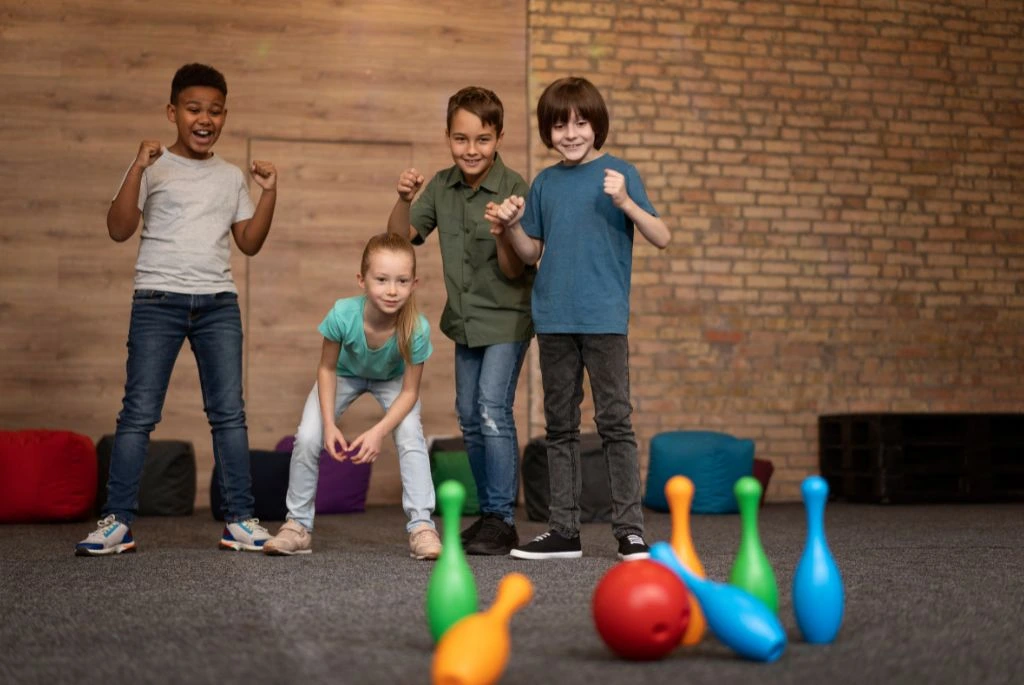
This is why active indoor games for preschoolers are part of everyday life at Little Scholar. Not as a reward. Not as a break. Just as something children genuinely need.
Children Carry Energy, Not Instructions
Preschoolers don’t wake up thinking about schedules. They wake up with energy in their bodies. When that energy has nowhere to go, it spills out in ways adults sometimes misunderstand. Active indoor games for preschoolers give that energy a direction.
Instead of running randomly, children are invited to jump, crawl, stretch, balance.
- There is movement
- There is structure
- There is release
And surprisingly, calm often follows. Teachers at Little Scholar observe this daily.
What Indoor Games Look Like (No Fancy Setup)
Indoor movement doesn’t mean chaos. And it doesn’t mean complicated equipment either. Most active indoor games for preschoolers are straightforward. Some days, it’s just tape on the floor. Some days, it’s chairs turned into tunnels. Some days, it’s music and actions.
You might see:
- Children walking slowly on a line
- Rolling a ball to a friend
- Jumping from one spot to another
- Stretching up high, then curling small
That’s it. Nothing dramatic. But it works.
Why Indoors Matters Just as Much
People often assume movement only belongs outside. But classrooms have limits. Weather changes. Space changes. Children still need movement. That’s where active indoor games for preschoolers matter most. They allow movement without noise taking over the room.
This balance is important, especially in a school like Little Scholar where learning and comfort go together.
Learning Happens While Bodies Move
Children understand ideas through their bodies before they understand them with their minds. This is something adults often forget. During active indoor games for preschoolers, teachers sometimes introduce big and small activities for preschool without saying much at all.
- Children jump like something big
- Then they curl up like something tiny
No explanation needed. They get it.
Emotions Change When Movement Happens
Preschool emotions can flip quickly.
- A small disagreement
- A sudden noise
- A long sitting activity
Movement helps reset all of that. Active indoor games for preschoolers help children release tension without talking about it.
- They move
- They breathe
- They calm down
At Little Scholar, teachers often notice fewer tears after movement time. It’s not magic. It’s regulation.
Also Read: Early Childhood Education: Giving Young Minds the Start They Deserve
Social Skills Grow Quietly Here
Indoor games are not loud competitions. They are shared experiences. During active indoor games for preschoolers, children learn things adults usually try to teach with words.
They learn:
- To wait
- To watch
- When to go
- When to stop
No lectures. Just practice.
Indoor vs Outdoor: Both Matter
Parents sometimes ask which is better. The answer is neither. Understanding the difference between indoor games and outdoor games helps here.
- Outdoor play gives freedom and wide movement
- Indoor games build control and awareness
At Little Scholar, both are planned intentionally. When outdoor play isn’t possible, active indoor games for preschoolers step in without reducing quality. That balance keeps children regulated throughout the day.
Safety Is Always Part of the Plan
Movement indoors only works when safety comes first. Active indoor games for preschoolers are planned with clear boundaries.
Teachers:
- Check the space
- Move furniture if needed
- Stay close
Children feel safe because the environment supports them.
How Indoor Games Fit Into the Day
Preschoolers need rhythm. Active indoor games for preschoolers are placed where they make sense.
Sometimes:
- First thing in the morning
Sometimes:
- After a long seated activity
Sometimes:
- When attention starts slipping
Children don’t need to be told why. Their bodies already know.
What Teachers Actually Do During These Games
Teachers don’t stand back with crossed arms. During active indoor games for preschoolers, they are present.
They:
- Show movements
- Slow things down
- Encourage the child who hesitates
- Gently guide the one who gets too excited
This is quiet work. But it matters.
Why Movement Supports Learning Later
There is a clear link between movement and readiness to learn. Active indoor games for preschoolers support more than muscles.
They support:
- Focus
- Listening
- Memory
- Self control
At Little Scholar, movement is never treated as a distraction. It’s part of preparation.
Indoor and Outdoor Together
A healthy preschool day includes indoor and outdoor games.
- One supports freedom
- The other supports structure
When outdoor play isn’t possible, active indoor games for preschoolers ensure children are not forced into stillness they are not ready for.
A Very Honest Closing Thought
Children are not meant to sit quietly for hours. Expecting that only creates frustration for everyone. Through thoughtful, active indoor games for preschoolers, Little Scholar allows children to move without being labelled restless.
- To breathe without being corrected
- To reset
- To return to learning calmer than before
Sometimes, that movement is the most important part of the day.