
A nursery classroom is rarely quiet for long. There are small voices, moving feet, crayons slipping off tables, and questions that appear without warning. This is what learning looks like at this age. An activity for a nursery class helps guide that energy in a gentle way, giving children something to engage with rather than asking them to sit still.
At Little Scholar, the nursery is seen as a beginning, not a preparation stage. Children are learning how to be away from home, how to trust new adults, and how to exist in a group. Every activity for the nursery class is planned with this reality in mind.
Why Nursery Children Learn Best Through Activities
At this age, children are not ready for formal lessons. They are still discovering how things work. Sitting still and listening for long periods is difficult, sometimes impossible. An activity for the nursery class gives them something to do while learning happens quietly in the background.
Teachers at Little Scholar often notice that children understand more when they are involved physically. Touching, moving, pointing, and repeating help ideas settle naturally. Over time, children begin to participate without hesitation.
This is why activities form the centre of the nursery routine.
What Activities Actually Look Like in a Real Classroom
An activity for nursery class does not need elaborate preparation. In fact, simple activities often work better than planned ones.
You might see children matching colours on the floor, listening to a short story, rolling a ball across the room, or pointing to pictures while a rhyme plays. Some children stay with the activity longer. Some move on quickly. Both responses are accepted.
An easy activity for nursery class leaves room for children to join without fear. There is no pressure to finish or perform. At Little Scholar, teachers watch closely but correct very little. This allows children to try without worrying about mistakes.
How Language Grows Before Reading and Writing
Language development begins with listening. Long before children can read or write, they are learning how words sound and how conversation works. Any activity for a nursery class often includes naming objects, answering simple questions, or repeating sounds during songs.
A simple English activity for a nursery class may involve picture cards, action rhymes, or storytelling, where children respond with gestures. There is no hurry. Some children speak quickly. Others take time.
Teachers wait. That patience helps children feel confident enough to speak when they are ready.
Art as a First Language
Many nursery children express themselves through colour and movement before words. An activity for a nursery class that includes creativity gives them space to do that.
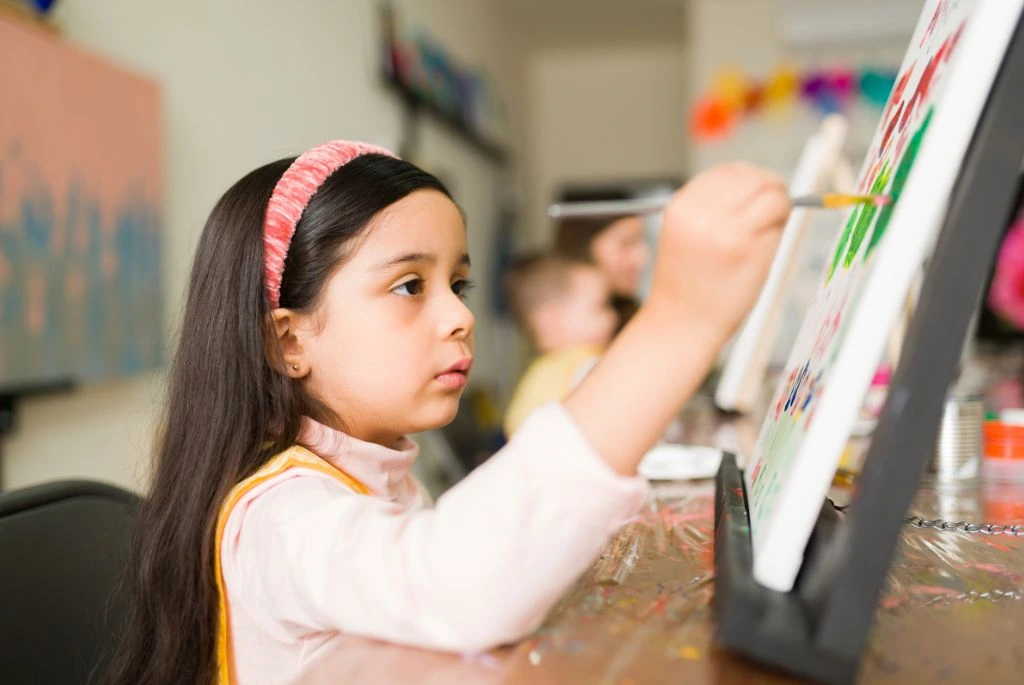
An art activity for a nursery class might involve finger painting, tearing paper, sticking shapes, or colouring freely. The result does not matter. What matters is the process.
At Little Scholar, no child is told their art is right or wrong. A page full of scribbles is just as valuable as a neat drawing. Children learn that expression is allowed, not judged.
What Children Learn Without Being Taught
A well planned activity for nursery class supports development quietly. Children may not realise they are learning, but skills build day by day.
Through regular activities, children develop:
- Better hand control
- Longer attention span
- Early thinking and sorting skills
- Listening habits
- Comfort around other children
These skills are not rushed. They grow through repetition and routine.
The Teacher’s Role During Nursery Activities
An activity for nursery class works only when the adult support feels calm. At Little Scholar, teachers stay close but do not interfere unnecessarily.
They help when frustration appears. They step back when confidence grows. They speak softly and give children time to respond.
This balance helps children feel supported without becoming dependent.
Also read: Craft Activities for Preschoolers: What We See Every Day at Little Scholar
How Activities Fit Into the Nursery Day
Children feel safe when they know what comes next. An activity for nursery class is placed thoughtfully within the daily routine.
Activities usually happen:
- In the morning to help children settle
- Between meals and rest time
- During transitions when energy changes
This rhythm helps reduce anxiety and builds trust.
Social Learning Happens Along the Way
Many social skills develop naturally during an activity for nursery class.
Children slowly learn to:
- Wait for their turn
- Share materials
- Sit beside others
- Follow simple group rules
These lessons are learned through experience, not explanation.
Supporting Nursery Activities at Home
Parents do not need special materials to continue an activity for the nursery class at home. Simple actions like talking, singing, drawing, or sorting objects are enough.
What matters most is time and patience. When children feel listened to, they feel confident to explore.
Why These Activities Matter in the Long Run
Early experiences shape how children feel about learning. A positive activity for the nursery class builds comfort, curiosity, and confidence.
Over time, children begin to:
- Participate willingly
- Communicate more clearly
- Adjust to routines
- Feel safe in group settings
At Little Scholar, nursery activities are treated with care because these early moments form the base for everything that follows.
Closing Thought
Children may not remember every activity, but they remember how they felt. Through each thoughtfully planned activity for the nursery class, Little Scholar helps children feel calm, capable, and accepted.
Those feelings stay long after nursery ends.