
The Importance of Education in Life: What Children Teach Us While We Think We’re Teaching Them

Most grown ups imagine learning as something loud, a classroom discussion, a worksheet, a project. But the importance of education in life often shows up in much quieter ways.
Take a seven year old standing in front of a shoe rack at school. They’re searching for their pair in a sea of identical black shoes. For a second, frustration flickers across the face. Then they pause, look again, notice the tiny scuff near the heel, and pick the right one.
It’s a tiny moment. But inside that moment is attention, memory, patience and problem solving, everything we claim to teach, unfolding naturally while no adult is performing a lesson. At places like Little Scholar’s play school, these everyday victories are just as meaningful as formal lessons. That’s the thing about the importance of education in life. It doesn’t wait for a timetable. It seeps into routine. It grows in silence. It hides itself in the smallest decisions children make long before we recognize them as real learning.
How Children Interpret the World Long Before We Explain It
The real beginning of education
We adults like categories: maths, language, values, discipline. Children don’t. They take the world as one continuous experience. A spilled bottle becomes a science experiment. A disagreement becomes a lesson in fairness. A new storybook becomes a doorway into someone else’s feelings.
And without noticing it, children begin to form their own understanding of the concept of education, not the one adults define, but the one they live.
To a child, the concept of education is simple:
- something that helps them understand what they couldn’t yesterday
- something that makes the world slightly less confusing
- something that brings a sense of “I can do this now”
This emotional clarity is often what adults overlook. We talk about curriculum; children talk about courage. We talk about skills; children talk about discovery. Yet both conversations orbit the same center, the importance of education in life, understood from two different heights.
A New Kind of Classroom for a New Kind of Childhood
Why learning today feels different from what parents remember
Most parents walk into a contemporary school and feel a flicker of surprise. Desks aren’t always in straight lines. Discussions spill beyond textbooks. Teachers sit beside students, not in front of them. All of this belongs to the modern education system, though the term itself feels too clinical for what’s actually happening.
The modern education system isn’t trying to make school “fun.” It’s trying to make it real.
- Real conversations.
- Real questions.
- Real mistakes.
- Real problem solving.
Life rarely hands you a perfectly packaged problem with one correct answer. The modern classroom imitates that reality, preparing children not just for exams but for uncertainty, which may be the most practical expression of the importance of education in life today.
Children raised in this environment learn to adapt. To collaborate. To speak up. To pause when overwhelmed. To keep going when stuck. And these traits matter wherever they go, whether they’re sitting for an interview or negotiating playground rules.
The Things Children Learn Without Being Taught
The hidden curriculum that shapes them more than any subject
Every child carries a private list of discoveries that adults rarely see:
- how long to wait before interrupting
- which friend will share their snack
- how to hide disappointment
- when to ask for help
- when to rely on themselves
None of these are part of any syllabus, yet they shape a child’s sense of competence. They define the importance of education in life in ways that no classroom lecture can.
- A child who fixes a fallen tower of blocks learns persistence.
- A child who comforts a classmate learns empathy.
- A child who tries again after failing learns resilience.
These moments layer themselves quietly, becoming a child’s internal compass, one that will guide them long after they’ve outgrown their school uniform.
Also Read: Early Childhood Education: Giving Young Minds the Start They Deserve
The Home as the Second Classroom
Even if parents don’t realize they’re teaching
Parents often underestimate the power of ordinary routines. But home is where children experiment with their first ideas about responsibility, honesty, effort, and independence.
A parent letting a child tie their own laces, even if it takes longer, reinforces the importance of education in more than a dozen motivational speeches.
A parent listening to a messy explanation teaches a child that their thoughts matter.
A parent handling a stressful situation calmly becomes a real life lesson in emotional regulation.
You don’t need to replicate school at home. Home already teaches its own curriculum, the curriculum of character.
How These Early Lessons Stretch Into Adulthood
A future shaped by moments too small to notice
Years later, you meet adults who are thoughtful, adaptable, good listeners, good leaders, patient colleagues, creative thinkers. Rarely do they attribute these traits to a single teacher or a single moment, yet the roots always go back to childhood learning.
- Someone who navigates conflict gracefully was once a child negotiating turns on the swing.
- Someone who thinks creatively was once a child encouraged to build crooked towers and wild stories.
- Someone who handles pressure without breaking was once a child allowed to fail without shame.
This is the lasting importance of education in life. It’s not just about opportunities or careers. It’s about shaping a person who can carry themselves with clarity, empathy, and confidence, qualities that matter in every room they ever walk into.
The Real Gift of Education
Not knowledge, but the ability to make meaning
If you strip away all the labels, subjects, methodology, curriculum, what remains is surprisingly simple:
Education gives a child the ability to understand their world and to understand themselves within it.
That’s the true importance of education in life. Not marks. Not medals. Not report cards. A child who understands becomes an adult who navigates, adapts, grows, questions, listens, leads, and keeps learning long after school ends.
Education is not a ladder they climb. It’s a direction they learn to face.
- Published in Networking
A Parent’s Honest Guide to Kindergarten in India
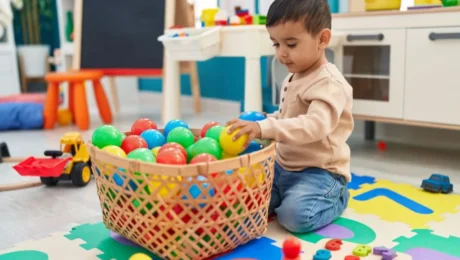
If you’re a parent, you already know this moment comes sooner than expected. One day your child is wobbling around the house with a toy in hand, and suddenly you’re looking for the right kindergarten in India where they’ll take their first real steps into the world.
Most parents we meet at Little Scholar share the same feelings. Excitement. Worry. Pride. A little fear. And a whole lot of hope. Choosing a school is not just about academics. It’s about handing your child to people you trust, in an environment that understands who they are.
This guide is written with that same emotion. No complicated jargon, no perfect sounding promises. Just a clear, honest look at what kindergarten really means today.
What Kindergarten in India Is Supposed to Feel Like
Over the years, the idea of kindergarten in India has shifted from being a formality to becoming one of the most important phases of childhood. It’s no longer a place where children sit in one spot and repeat alphabets. Instead, it’s a space where they explore, make friends, express themselves and slowly understand the world around them.
Most schools divide the early years into Pre KG or Nursery, followed by LKG and UKG. But the real purpose of this stage is simple. Children learn to adjust, follow a routine, listen, communicate and enjoy discovering new things. When done right, kindergarten becomes the heart of early development, not a race to finish worksheets.
And that’s why a good kindergarten in India focuses on experiences over pressure.
Also read: Early Childhood Education: Giving Young Minds the Start They Deserve
Pre KG: What It Really Means for Your Child
Parents often ask us what Pre KG is actually for. The pre kg full form is pre kindergarten, but what matters more is the feeling behind it. It’s the phase where children get used to being away from home while still feeling safe and cared for.
Schools usually follow the recommended pre kg age of around two and a half to four years. At this age, kids don’t need textbooks. They need patient adults, predictable routines and plenty of play.
At Little Scholar, Pre KG feels more like a gentle introduction to the world. Children start with simple routines, short activities and lots of hands-on fun. Daily pre kg activities include storytelling, messy play, music sessions, building blocks, painting and outdoor time. These are intentionally small experiences, but they make a big difference in communication, confidence and independence.
Why Kindergarten in India Shapes So Much of Who Kids Become
A well designed kindergarten in India doesn’t try to hurry learning. Instead, it helps children grow in all directions. The skills they build here stay with them long after they leave kindergarten.
Here’s what really develops during these years:
Social readiness
Children learn how to share, wait for their turn, speak up, listen to others and handle small disagreements without breaking down.
Early language and expression
Through stories, songs and conversations, children naturally pick up vocabulary and learn how to express their thoughts.
Thinking skills
Recognising patterns, counting objects, sorting things, connecting cause and effect. These small discoveries build early problem solving abilities.
Physical confidence
Running, climbing, threading beads, holding crayons. All these everyday actions help children strengthen their bodies and coordination.
Emotional maturity
Children learn how to calm themselves, feel proud of small achievements and handle new situations with more courage.
This is why kindergarten in India has moved beyond just academics. It’s about building the whole child.
Celebrations That Stay in a Child’s Memory Forever
Ask any child what they loved most, and they’ll talk about celebrations. There are so many special days to celebrate in kindergarten in India, and each one has a charm of its own.
At Little Scholar, celebrations feel alive. Not fancy, not complicated. Just simple, meaningful experiences that stay with children.
- Festivals become colorful stories
- National days become lessons in belonging
- Theme days make learning fun and visual
- Grandparents Day and Teachers Day teach children to appreciate the people who care for them
- Earth Day teaches them to look after nature with small actions
These celebrations add a heartbeat to kindergarten in India. They make school feel like a place of joy, not just learning.
Why Parents Feel Comfortable Choosing Little Scholar
Every school promises something. But parents choose Little Scholar because the environment feels real. Here, teachers greet children by name. Children walk in with excitement instead of fear. And learning unfolds naturally, not forcefully.
For families searching for a warm, dependable kindergarten in India, Little Scholar offers:
- Teachers who understand child behavior at a personal level
- A learning approach that mixes play, structure and creativity
- A safe environment where every child feels seen
- Activities that make children curious rather than anxious
- Celebrations that build memories
- A smooth journey from Pre KG to LKG and UKG
Most importantly, the school feels like a second home. Parents feel it. Children feel it. Teachers feel it.
What Children Actually Learn in Kindergarten
Throughout their time in kindergarten in India, children at Little Scholars slowly build skills that prepare them for primary school without losing their natural joy.
They learn:
- Letter sounds through stories and conversations
- Early writing skills through guided activities
- Number sense through hands on exploration
- Art, music and creative expression
- Teamwork through group tasks
- Confidence through simple presentations and show and tell
- Responsibility through small routines like packing bags or tidying up
By the end of UKG, children are ready for the next stage both emotionally and academically.
A Gentle Closing Thought
Choosing a school is an emotional decision. And it should be. You’re choosing the place that will hold your child for the first time outside home. If you’re looking for a kindergarten in India that values childhood as much as academics, Little Scholar Noida is a space where children feel loved, understood and free to grow at their own pace.
- Published in Top Play School