The first time a child walks into a classroom, something shifts. It’s not dramatic. No big moments. Just a quiet beginning. A room full of colors, unfamiliar faces, and tiny decisions—where to sit, what to pick up, who to talk to.
For parents exploring schools like Little Scholar Noida, this stage feels bigger than it looks. Because this isn’t just about school admission. It’s about choosing the kind of start your child gets. And that start is shaped, almost entirely, by one thing—the kindergarten curriculum.
Let’s get into what actually matters.
It’s Not About Early Academics (And It Never Was)
There’s a common instinct among parents to look for “advanced” learning. Early reading, writing, counting. It feels reassuring. But here’s the catch—pushing academics too early often misses the point.
A well-designed kindergarten curriculum isn’t trying to create mini scholars. It’s trying to build thinkers. Children who ask questions. Children who aren’t afraid to try, fail, and try again.
At this age, learning is less about answers and more about exposure.
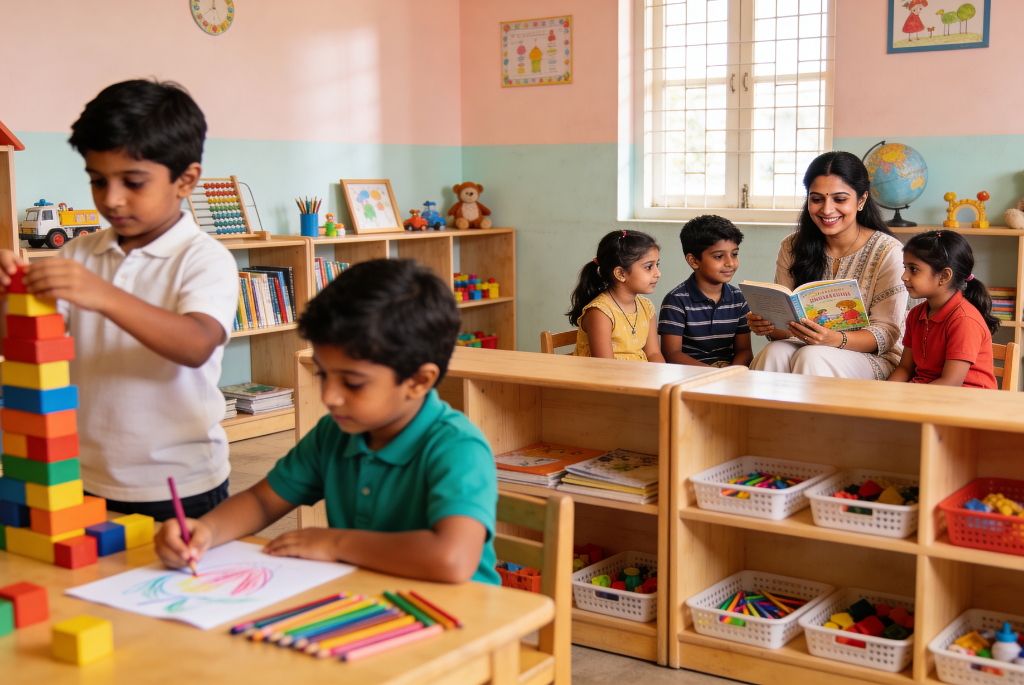
A child stacking blocks is learning balance.
A child scribbling is learning expression.
A child asking “why” repeatedly is learning curiosity.
And those are the real foundations.
What’s Changed in the Kindergarten Curriculum in India
If you compare today’s classrooms with what existed 10–15 years ago, the difference is obvious. Back then, the kindergarten curriculum in India often leaned toward discipline and repetition. Writing pages of alphabets. Memorizing numbers. Sitting still.
Now, the shift is toward experience-based learning.
The kindergarten curriculum in India today blends structure with flexibility. There’s still a framework, but the delivery is far more dynamic. Storytelling replaces rote learning. Activities replace instructions.
Schools like Little Scholar Noida have adopted this shift well. The idea is simple—don’t rush the child into the system. Let the child grow into it.
Classrooms That Don’t Feel Like Classrooms
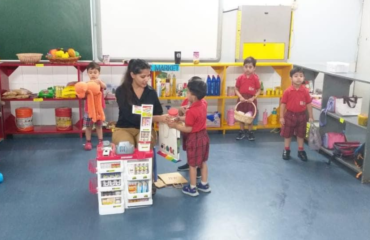
Walk into a strong kindergarten setup and you’ll notice something immediately—it doesn’t feel rigid. There’s movement. Noise. Interaction. You might see a group building something with blocks, another listening to a story, someone quietly drawing in a corner. It can look unstructured, but it isn’t random.
A thoughtful kindergarten curriculum is designed to allow controlled freedom.
Because learning at this stage happens in layers:
- Watching others
- Trying things independently
- Repeating actions naturally
And all of this happens best in an environment that doesn’t feel restrictive.
Why Play Is Doing More Work Than You Think
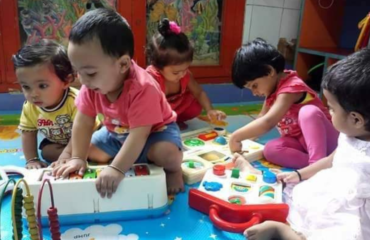
It’s easy to underestimate play. From the outside, it looks like downtime. But within a strong kindergarten curriculum, play is doing the heavy lifting.
Take something as simple as group play:
- Children learn to wait their turn
- They negotiate roles
- They deal with small conflicts
Or consider something like clay modeling:
- It improves motor skills
- It encourages creativity
- It builds focus
The point isn’t the activity itself. It’s what the activity unlocks.
And that’s why schools that take play seriously tend to produce more confident learners.
Language Isn’t Just About Words
One of the biggest indicators of early development is how a child communicates.
Not just reading or writing—but expressing.
A well-crafted kindergarten curriculum puts strong emphasis on:
- Speaking freely
- Listening actively
- Participating without hesitation
You’ll often see storytelling sessions, show-and-tell activities, or simple group conversations.
These moments matter.
Because a child who can articulate thoughts early doesn’t just perform better in school—they navigate the world better.
The Part No One Talks About: Emotional Learning
Here’s something that doesn’t show up on report cards but matters deeply—emotional growth.
At this stage, children are learning:
- How to share attention
- How to deal with losing a game
- How to make and keep friends
A good kindergarten curriculum doesn’t ignore this. It builds space for it.
Sometimes it’s through guided play. Sometimes through simple routines. Sometimes just through observation and gentle correction.
Over time, these small interactions shape how a child responds to people and situations.
And that carries forward for years.
Teachers Set the Tone
Curriculum on paper is one thing. What happens inside the classroom is another. In kindergarten, teachers aren’t just delivering lessons. They’re setting the emotional climate of the room.
A strong kindergarten curriculum works best when teachers:
- Encourage questions instead of shutting them down
- Notice quieter children and bring them in
- Allow space for mistakes without pressure
Children at this age don’t respond to authority as much as they respond to energy. If the classroom feels safe, they open up. If it feels strict, they withdraw. It’s that simple.
Structure Without Pressure
A lot of parents worry about whether a flexible approach means lack of discipline. It doesn’t. A good kindergarten curriculum has structure. It just doesn’t feel forced.
There’s a rhythm to the day:
- Activity time
- Story time
- Free play
- Group interaction
But within that rhythm, there’s room to adjust based on how children are responding.
Some days, a planned activity might stretch longer because kids are engaged. Other days, it might shift entirely.
And that flexibility is what keeps learning natural.
The Space Itself Teaches
The design of the classroom quietly shapes behavior. Spaces that allow movement, access to materials, and visual stimulation tend to encourage exploration. A well-thought-out kindergarten curriculum includes this aspect intentionally. Low shelves, interactive corners, open areas—these aren’t design choices for aesthetics. They’re functional.
They tell the child, without words: you’re allowed to explore.
What Parents Can Do (Without Overdoing It)
It’s easy to feel like you need to “support learning” at home in a structured way. The best way to reinforce a kindergarten curriculum is through everyday interaction:
- Let your child ask questions, even if they seem repetitive
- Involve them in small decisions
- Read together without turning it into a lesson
Learning at this stage isn’t about extra work. It’s about continuity.
Choosing the Right Fit
When you’re evaluating schools, it’s easy to get distracted by facilities. But the real indicators are simpler. Look at:
- How children are interacting in the classroom
- How teachers are engaging with them
- Whether the environment feels relaxed or controlled
A strong kindergarten curriculum shows itself in how children behave—not just in what’s written in a brochure.
What Stays With the Child
The early years don’t just prepare children for the next grade. They shape how children see learning itself. A child who enjoys this phase is more likely to:
- Stay curious
- Adapt easily
- Build confidence naturally
That’s the real outcome of a good kindergarten curriculum.
Not early excellence. But long-term ease with learning.
Final Thought
The goal isn’t to get ahead early. It’s to build a strong start. A thoughtful kindergarten curriculum respects the pace of childhood. It doesn’t rush it, doesn’t overload it, doesn’t try to manufacture outcomes too soon. It simply creates the right conditions.
And when those conditions are right, growth follows on its own.
Q&A
1. What should a good kindergarten curriculum focus on?
A strong kindergarten curriculum focuses on overall development—communication, social skills, emotional growth, and basic cognitive abilities—rather than just academics.
2. How is the kindergarten curriculum in India evolving?
The kindergarten curriculum in India is moving away from rote learning toward activity-based and play-driven methods, making learning more engaging and child-friendly.
3. Is academic learning important at the kindergarten level?
Basic exposure is important, but the focus should remain on building curiosity, confidence, and communication skills rather than pushing formal academics too early.