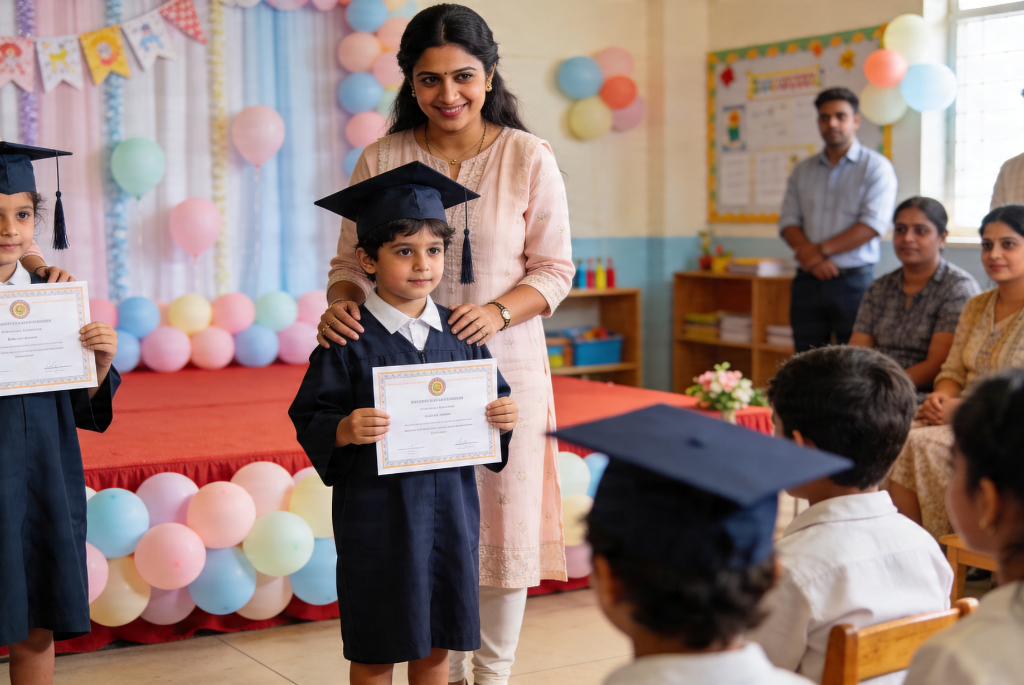
If you arrive early enough on a kindergarten graduation day, before the chairs fill up and before the children are brought out, the space feels almost ordinary. A few decorations. A small stage. Teachers moving around with a kind of quiet focus.
Nothing about it suggests that in a short while, a room full of parents will sit there trying to hold on to a feeling they didn’t expect to have.
At Little Scholar Noida, this moment is never overproduced. There’s no attempt to make it grander than it needs to be. And that’s exactly why it lands the way it does. It feels real. Close to what the year actually was. Because the truth is, this day isn’t about what happens on stage. It’s about everything that led up to it.
Before the Certificates, There Was Uncertainty
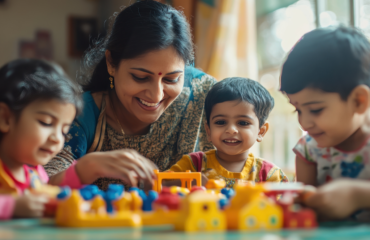
Go back to the beginning of the year. A child standing at the classroom door, not quite sure whether to step in. A hand that doesn’t want to let go. A face scanning the room for something familiar.
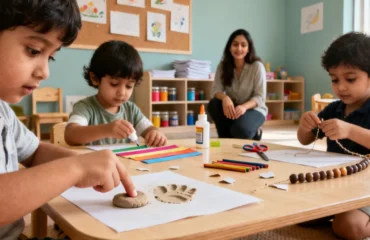
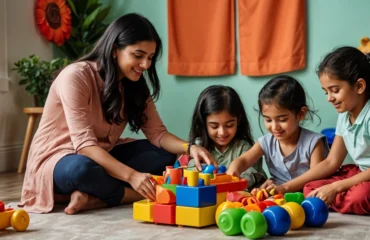
No one calls that moment “learning,” but it is. A thoughtful kindergarten curriculum and the environment around it, starts right there. Not with alphabets or numbers, but with adjustment.
Some children take a day. Some take longer. The teachers who understand this don’t rush the process. They don’t treat hesitation as something to fix quickly. They give it space. Months later, when the kindergarten graduation ceremony takes place, that first moment feels very far away. But it’s the same journey.
The Changes That Don’t Announce Themselves
There’s no single day when a parent suddenly says, “Now my child is different.”
It creeps in.
- A longer answer to a simple question.
- A story told without being prompted.
- A willingness to try something without looking around first.
You notice it in pieces. And because it happens gradually, it’s easy to underestimate. That’s why graduation day for kindergarten often catches parents off guard. It forces a pause. It makes you look back. And when you do, the change feels bigger than it did while it was happening.
What Children Think This Day Is About
Here’s the interesting part. Children don’t experience this day the way adults do. They’re not thinking about “milestones” or “transitions.” They’re thinking about very immediate things.
- Where they will sit.
- When their name will be called.
- Whether their parents can see them.
The cap matters. The certificate matters. The applause matters. But not in a symbolic way. In a very direct, present way.
A well-handled kindergarten graduation meets them at that level. It doesn’t overload the moment with meaning. It lets the experience stay simple.
The Thin Line Between Celebration and Pressure
It’s surprisingly easy to get this wrong.
- Add too much structure and the day becomes a performance
- Add too many expectations and children start to withdraw.
The best kindergarten graduation ceremony sits somewhere in between.
There is a plan, but it’s flexible. There is participation, but not compulsion. Some children speak clearly into a microphone. Others say very little. Some waves. Some just stand and look around. All of it is allowed. That’s what makes the day work.
What Teachers Are Actually Watching
While parents watch the stage, teachers are often watching something else entirely.
They’re noticing the child who would not stand alone in the first month, now walking up without hesitation.
They’re noticing the one who struggled to follow instructions, now waiting for their turn.
They’re not measuring performance. They’re recognising progress.
That’s what gives a kindergarten graduation its weight. Not the event itself, but the context behind each child’s presence there.
Why This Moment Stays With Parents
It’s not the certificate. It’s not even the photos, though those will be looked at many times. It’s a very specific realization. They’re going to be okay.
That thought doesn’t come from a report card. It comes from watching your child in a space where they once felt unsure, now standing comfortably. That’s why graduation day for kindergarten feels heavier than expected. It closes a loop that started months ago, often without you fully noticing.
The Ceremony as a Mirror of the School
If you want to understand a school, watch how it handles this day. Not the decorations. Not the schedule.
Watch the tone.
- Do teachers rush children, or wait for them?
- Do they correct, or guide?
- Do they prioritise how things look, or how children feel?
A well-balanced kindergarten graduation ceremony reflects a school that understands early learning beyond academics. It shows patience. It shows restraint. And those qualities don’t appear only on this day. They’re part of the everyday environment.
The Part No One Talks About: Letting Go
There’s a subtle shift that happens for parents too. Until this point, school still feels like an extension of home. A first step, but a small one. After kindergarten graduation, it feels different.
The next stage carries more structure, more expectation. And this day sits right in between.It’s not dramatic. There are no big speeches about it. But you feel it.
What This Day Doesn’t Try to Do
It doesn’t try to prove that children are “ready” in a formal sense. It doesn’t try to show outcomes. It simply marks that something has happened.
Growth has taken place. Quietly. Consistently. That’s what a meaningful kindergarten graduation does. It acknowledges without overstating.
Looking Ahead Without Rushing
Children don’t dwell on transitions the way adults do. For them, what comes next is simply… next. A new classroom. New routines. Maybe new faces.
But because of what they’ve already experienced, they approach it differently.
- With less hesitation.
- With more curiosity.
That’s the quiet success behind a well-handled kindergarten graduation.
If You’re Choosing a School
There’s a tendency to ask very direct questions. What will my child learn? How quickly will they progress? Those matter. But they don’t tell the whole story.
A better question might be:
How does the school handle moments that aren’t measurable?
- Moments like the first day.
- Moments like transitions.
- Moments like kindergarten graduation.
Because those are the moments that shape how a child experiences learning itself.
Frequently Asked Questions
1. Why is kindergarten graduation important?
A meaningful kindergarten graduation helps children recognise their own progress and transition comfortably into the next stage of learning.
2. What happens during a kindergarten graduation ceremony?
A typical kindergarten graduation ceremony includes simple acknowledgements, child participation, and a calm celebration of growth rather than performance.
3. How does graduation day for kindergarten impact children?
Graduation day for kindergarten gives children a sense of completion and confidence, helping them move forward without anxiety into the next phase of school.