
Discover the Top Benefits of Enrolling Your Child in a Day Boarding School in Noida

Are you looking for the perfect institution where academics are blended with extracurricular activities to bring out the true potential of your child? Well, the day boarding school in Noida is here to meet your demands.
A day boarding school is a hybrid model where your child can enjoy the extensive facilities and engaging programs of a full-time boarding school without an overnight stay. In addition to that, day boarding schools also offer various perks. Read this article till the end to know them all.
Benefits of Enrolling Your Child at Day Boarding School in Noida
Enrolling your child in the best day boarding school in Noida has several benefits. Let’s check them out!
- Disciplined Lifestyle: A well-structured educational approach in day boarding school allows students to learn discipline and maintain a balanced routine in life. They also learn to manage their time effectively through this practice.
- Comprehensive Education: Day boarding schools in Noida offer an all-rounder education with proper emphasis on both academics and extracurricular activities. It allows students to discover their potential and identify their true passion. Students also have access to a world-class infrastructure at day boarding schools.
- Extended Learning Time: Extending learning hours at day boarding schools allows them to focus completely on their education and skill enhancement. The best part is students can spend the entire day on academics as well as on extracurricular activities and go home on the same day.
- Social Development: Students coming from various cultural backgrounds in day boarding schools allow students to get exposure to various cultures. Students also participate in group activities and collaborative projects to develop team spirit.
- Parental Involvement: When compared with boarding schools, parents can become more involved in their child’s education when they admit them to a day boarding school.
- Safety and Supervision: The top day boarding school in Noida provides a safe and supervised environment during school hours, which can be reassuring for parents. The extended school hours ensure that children are in a controlled environment rather than spending time alone at home.
- Convenience: For people living in or near Noida, day boarding schools offer the convenience of not having to commute a long distance. Students can benefit from the facilities and programs of a boarding school yet come back home at night.
- Holistic Development: Day boarding schools often focus on the overall development of a child, including physical fitness, creative expression, and emotional well-being. They provide a platform for children to explore their interests and talents in a structured setting.
- Community Building: Attending a day boarding school allows students to build relationships with a diverse group of peers, which can be beneficial for building a community and long-lasting friendships.
Extracurricular Activities in a Day Boarding School in Noida
Apart from academics, day boarding schools in Noida also focus on various extracurricular activities to promote holistic development in children. Here’s a list of all the extracurricular activities done in Little Scholar:
- Sports and physical activities like games and swimming.
- Art and crafts.
- Field trips and excursions.
- Culinary arts.
- Community service and social responsibility.
- Health and wellness like aerobics and martial arts.
With that, we have arrived at the end of this article. In conclusion, it’s safe to say that enrolling your child in a day boarding school in Noida will offer a unique blend of academic rigor, comprehensive extracurricular opportunities, and a balanced lifestyle.
- Published in Best Play School
How Early Childhood Care and Education Pave the Way for Success

In the inspiring words of Nelson Mandela, “Education is the most powerful weapon which you can use to change the world.” Indeed true. He made us believe that we will first have to be the change in order to change the world. And there’s no better way to pave a path for change rather than empowering our future generation. This is exactly where early childhood care and education come into play. It is not just about keeping your children engaged, but it is also about a kick start to their holistic development through play-based education. Come, let’s see why investing in early childhood education is mandatory these days.
Why is Investing in Early Childhood Care and Education Necessary?
Early childhood care and education form the building blocks of a child’s career. In this segment, we will discuss the importance of early childhood care and education and why it’s important to invest in good quality early childhood education:
- Foundation for Future Learning: Early education is the primary reason for brain development in children. A good quality early childhood education helps children to develop a strong foundation for cognitive, social, and emotional skills.
- Improved Academic Outcomes: Children who receive good quality early childhood education are observed to become better in their academic performance in high school. They are seen to score higher on tests, secure better grades, and have a brighter career.
- Social and Emotional Development: Children are made to participate in various activities which stimulate their social and emotional development. At Little Scholar, we organize various outdoor activities and field trips for children to make them interact with various people and enhance their socializing skills.
- Cultural and Social Awareness: All of India’s early childhood care and education systems introduce children to diverse cultures and social norms. It helps children to know about various cultures and get familiar with them. Knowing different cultures also help them in understanding different perspectives.
- Foster Behavioral Skills: Early childhood care and education in India are important because they inject behavioral skills into children. Children develop a behavioral pattern by following a well-planned routine in daycare centers and pre-schools.
- Stimulation of Emotional Development: Early childhood care and education programs in India allow children to be familiar with and understand their emotions. They also learn to express their feelings properly.
- Health and Well-Being: Several early childhood education programs incorporate physical activities, which ensure the physical well-being of children.
- Long-Term Social Impact: Many people misinterpret the true meaning of early childhood care and education. Investing in high-quality early childhood programs has a long-term positive societal impact. It helps a child to grow up into a highly skilled and productive individual who can contribute to the stronger economy of our nation. Additionally, it helps to reduce crime rates, which is quite beneficial for our society.
Conclusion
In conclusion, investing in early childhood care and education is not just a commitment to nurturing the young minds of today but a strategic investment in the future of our society. By laying a strong foundation during these formative years, we empower children to reach their full potential.
- Published in Best Play School
Nurture the Next Generation: Choose Nursery Teacher Training Course

The legendary educator Maria Montessori once said “The child is both a hope and a promise for mankind.” So if you are willing to make a difference to the mankind, you might consider becoming a nursery teacher. The best approach to become a nursery teacher is by taking a professional nursery teacher training course from some renowned institution. Whether you are willing to create magical learning experiences or want to make a difference in the lives of little ones, a professional course on nursery teaching is your golden ticket.
Nursery Teacher Training Courses
Nursery Teacher Training Course in Delhi NCR primarily focuses on providing individuals with the necessary skills and knowledge to effectively educate children. The curriculum can vary depending on the specific institution or the level of certification or diploma being sought. However, the common core curriculum of nursery teacher training course are:
Curriculum
- Child Development: This includes understanding a child’s growth, cognitive development, physical development, and social and emotional development.
- Early Childhood Education: This includes learning about various teaching methodologies, classroom management techniques, and curriculum planning for students.
- Curriculum Development: Curriculum development includes creating age-appropriate learning activities and materials for students.
- Assessment and Evolution: It is all about learning different assessment methods and gaining the skills to evaluate a child’s true potential.
- Health and Safety: This includes understanding a child from a health perspective and knowing nutrition and safety protocols.
- Special Needs Education: It is all about knowing how to support children with special needs or children with certain disabilities.
- Play-Based Learning: Play-based learning is quite dominating in today’s world. Especially in pre-schools like Little Scholar. This is all about exploring the importance of play-based learning and coming up with different educational games that will keep children engaged.
- Literacy and Numeracy: Developing skills in teaching basic literacy and numeracy concepts to young children.
- Art and Music: Understanding the role of art and music in early childhood education and how to integrate them into the curriculum.
- Parent Involvement: Learning about strategies for involving parents in their child’s education.
Duration:
The duration of the nursery teacher training course typically ranges from 6 months to 2 years. However, the exact duration of the course varies in different institutions. Moreover, the duration also depends on the type of certification that is sought after. Some programs may offer short, certificate-based courses, while some programs may offer a full-fledged diploma or degree in early childhood education.
Also Read: Building Blocks of Success: The Importance of Preschool Education
In conclusion, nursery teacher training courses provide a solid foundation for individuals aspiring to work in the field of early childhood education. By equipping educators with the necessary knowledge and skills, these programs contribute to the development of nurturing and stimulating learning environments for young children.
FAQs:
Where can I get a nursery teacher training course in Delhi NCR?
If you are residing in or anywhere near Delhi NCR, then you can find several institutions that offer nursery teacher training courses. It is always better to do some online research or take recommendations from friends in the same field.
What is the duration of the nursery teacher training course?
Typically, the course duration of nursery teacher training ranges from 6 months to 2 years. It varies in different institutions based on the type of course that is being pursued.
What are the nursery teacher training course fees?
The average cost of a this teacher training course in India ranges from INR 13,000 to INR 30,000. However, at times, the fees vary according to the type of course that is being pursued.
- Published in Best Play School
Play School Fees: What Are You Really Paying For?

Children are often described as ‘flower buds’ that grow into beautiful, vibrant-looking flowers. Just like a gardener protects and nurtures the buds in his garden, as parents, we must do the same for our children.
Playschool is the first formal institution a child visits, which takes care of a child’s cognitive, emotional, and physical development. When selecting a play school, parents often encounter challenges.
In this blog post, we have shed light on the play school fees so that it becomes easy for parents to develop an idea about the same.
What are the Types of Play Schools in India?
The following are the types of play schools in India:
- Traditional Play Schools: These play schools focus on structured, teacher-led activities. Traditional play schools emphasize foundational skills like basic literacy, numeracy, socialization, and play.
- Montessori Play Schools: Montessori play schools are based on the educational philosophy of Dr. Maria Montessori. These schools emphasize independence, hands-on learning, and respect for a child’s natural psychological development.
- Waldorf Play Schools: Waldorf play schools are based on the teachings of Rudolf Steiner. They focus on holistic education. The curriculum is designed to develop a child’s intellectual, artistic, and practical skills in an integrated and natural way.
- Play-Based Learning Schools: Play-based learning schools prioritize play as the primary mode of learning. These schools believe children learn best through play and that play helps develop cognitive, social, and emotional skills.
- Cooperative Play Schools: Cooperative play schools are community-driven and often involve parents actively in the school’s operation.
- Special Needs Play Schools: Special needs play schools cater specifically to children with developmental, physical, or learning disabilities. These schools provide specialized support and tailored educational programs to meet individual needs.
Also Read: From Relay Races to Obstacle Courses: Kindergarten Sports Day Ideas You’ll Love
Understanding Play School Curriculums in Little Scholar
The following are the play school curriculums followed in Little Scholar:
- Social and Emotional Development: At Little Scholar, we encourage children to participate in group plays and collaborative projects to enhance their socialization skills and emotional development. These activities allow children to express their feelings through art, storytelling, role-playing, and other collaborative projects.
- Cognitive Development: Our teachers at Little Scholar introduce letters, sounds, and simple words through songs, stories, and interactive games to children. It helps in the cognitive development of a child. Children are also given to solve puzzles, which help develop critical thinking and decision-making.
- Language Development: We conduct frequent storytelling activities at Little Scholar to develop listening skills, vocabulary, and a love for reading in children. We also introduce new words to children through songs, rhymes, and riddles.
- Physical Development: At Little Scholar, we also focus on a child’s physical development through activities like running, jumping, climbing, and playing. We conduct regular outdoor activities to enhance the physical development of children.
- Creative Expression: Children at Little Scholar are encouraged to express their creativity through drawing, painting, sculpting, etc. It allows them to enhance their creativity and bring out their best potential.
- Environmental Awareness: We also conduct simple activities like gardening, nature walks, and tree plantation at Little Scholar to make children aware of the environment.
- Routine and Structure: We make children accustomed to a particular routine to help them adapt to good habits and develop time management skills.
- Cultural and Social Awareness: We introduce children to several cultures and traditions at Little Scholar. We celebrate every festival at our playschool to make children understand diversity.
- At Little Scholar, we always put our best efforts into designing a well-rounded play school curriculum. Our curriculum has a balance of each element, ensuring the holistic development of a child in a supportive and engaging environment.
Factors Affecting Play School Fees Structure
Several factors determine the fee structure of a playschool. Before we start judging and comparing, here are a few factors to understand:
- Location: Location plays a significant role in determining the fee structure of a play school. Schools in urban areas or affluent neighborhoods have higher fees due to the increased operational costs.
- Education Approach: The education approach and curriculum also play a major role in determining the play group school fees. Specialized programs such as Montessori or Waldorf are typically more costly due to their unique approach.
- Facilities and Infrastructure: Another determining factor of play school fees is the facilities and infrastructure provided to children. Schools with infrastructures like playgrounds, educational toys, television, projectors, etc, are costly.
Understanding these factors will help parents to develop an idea about play school fees and choose accordingly for their child.
FAQs:
What are the annual fees for play school in India?
The annual fees for play schools in India differ from one another and are also dependent on several factors. You may refer to the fee structure of different play schools to develop an understanding of the annual fees for play schools in India.
How do I know the play school near me with fees?
You may easily know about the play school fees details near your house by getting in touch with them through their official website.
How do I know the details of a play school near me with fees?
You can easily find out the details about your nearest play school with fees through their official website.
- Published in Top Play School
Little Explorers: Engaging Toddler Activities for Your Children
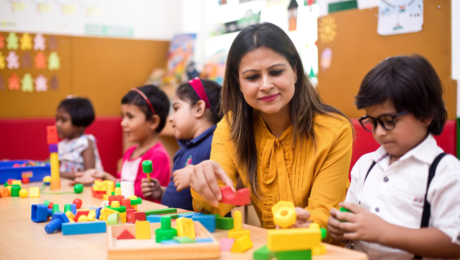
A famous quote goes, “children learn as they play. Most importantly, children in play learn how to learn”. Being parents or preschool teachers, we often encounter challenges when designing toddler activities. Toddlers are like pieces of clay that can be beautifully molded in different shapes.
It is our responsibility to come up with various activities that can target the overall development of children.
If you are running short of toddler activity ideas, then this article is tailor-made for you. Read till the end to find interesting and fun activity ideas for your toddlers, which can help them in their overall growth.
Productive Toddler Activities at Home
Toddlers spend the majority of their time at home. Hence, mothers can engage themselves in productive activities that contribute to their development. Here is a list of some of the productive activities for toddlers at home:
- Art and Craft: Make your child engaged with art and craft activities which will enhance their creative thinking power. You may buy coloring books, which will help them to get familiar with different colors. Let them work independently on different arts and crafts projects where they can come up with innovative ideas and ways to execute them.
- Learning Activities: Spend some time to sit with your child and participate in learning activities. You may buy some story books for them which contain a lot of pictures. Pictures will help them to relate to the things written in the book and develop a better understanding of different things. Pictures will also help in grabbing your child’s attention and keep him/her engaged throughout the reading activities. Introduce your child to numbers with some real-life examples. For example, while giving chocolates to your child, ask him/her to count the number of chocolates.
- Educational Games: You can involve your child in various educational games such as puzzles, building blocks, etc. These are brain development games designed especially for toddlers. These games improve a child’s critical thinking capacity and let them analyze different problematic situations and come up with solutions.
- Household Chores: Involve your child in your daily household chores and keep him/her engaged with simple tasks. This will help them to develop a collaborative attitude within themselves. While cooking, you can introduce different vegetables and fruits to your child. It is an amazing way to make him/her learn about various things by enhancing his/her cooperative skills.
Also Read: Day Care Centre Near Me with Fees: A Parent’s Guide to Budget-Friendly Childcare
Educational Toddler Activities at Preschool
Toddlers going to preschool are kept engaged in various activities. These activities are mostly play-based, and it’s made sure that they enjoy every bit of time they spend at the playschool. Here’s a list of learning activities for toddlers at Little Scholar:
- Language Development Activities: Language development activities include storytelling, reading, puppet shows, dancing, singing, etc. These engaging and interactive activities will help children to understand language in different forms, such as story form or in the form of a song, and resonate with it.
- Outdoor Activities: Outdoor activities include physical activities, such as going on field trips or observing nature. These activities will help a child to get familiar with various elements of nature like different trees, animals, birds, etc. Going on field trips can become little adventures for them, exploring different places and doing several activities. Physical activities will help toddlers in their physical development.
- Social Skill Development Activities: Social skill development activities include interacting with peers, participating in interactive activities, etc. These activities help children develop a collaborative attitude in themselves and learn to socialize with their peers.
- Play-based Educational Programs: Play-based educational programs include fun activities, interactive programs, and engaging activities that promote overall development in a toddler. Preschools conduct summer camps, too, which include several activities such as cooking, arts and crafts, pottery, storytelling, pool parties, field trips, etc.
That was all about toddler activities. Remember, the best activities are the ones that bring smiles to your little one’s face. Keep exploring, experimenting, and, most importantly, enjoying those precious toddler moments.
FAQs:
What are the indoor activities for toddlers?
The indoor activities for toddlers include:
- Art and craft.
- Storytelling.
- Pottery.
- Cooking.
- Dance and music.
- Puppet shows.
What are some learning activities for toddlers?
Some learning activities for toddlers include:
- Art and craft.
- Collage making.
- Storytelling.
- Group activities.
- Tree plantation.
- Non-gas cooking.
- Published in Uncategorized
Building Blocks of Success: The Importance of Preschool Education
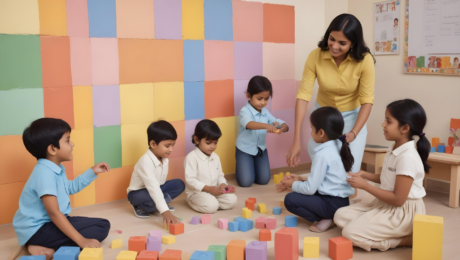
Have you ever wondered what the importance of preschool education is? The truth is that a play school offers more than just games and interactive programs. It is the beginning of our children’s educational and developmental journey, laying the strong foundation for their success in the future.
We all want the best for our children as parents. We want kids to flourish, have self-assurance, and enjoy education. The first step in achieving that is attending preschool. Now, let’s explore the world of preschool education and learn why this is one of the most crucial choices we will ever have to make for the future of our kids.
Importance of Preschool Education and Early Childhood Education
A child’s future can be effectively invested in preschool education. It establishes a solid foundation for their general growth and positions them for success in the classroom and beyond. The following factors explain the importance of preschool and early childhood education.
- Cognitive Development: Preschoolers learn about letters, numbers, and fundamental ideas to prepare for reading and math. Children can also learn how to solve difficulties by participating in plays and other activities. They start to analyze problems and think creatively.
- Social and Emotional Development: Children can engage in peer interaction in preschool. It teaches kids how to work together, share, and settle disputes with their classmates. Learning to recognize and communicate their feelings helps preschoolers develop empathy and understanding.
- Language and Literacy Development: Children are exposed to new words and concepts at the preschool. It enhances their language skills. Moreover, preschoolers learn to express themselves clearly and effectively.
- Physical Development and Health: Healthy lifestyle choices, such as diet and exercise, are frequently emphasized in preschools. Running, leaping, and drawing are exercises that promote the development of physical coordination.
- Future Success: A happy preschool education fosters a lifetime love of learning. Children attending preschool are accustomed to an organized learning environment, facilitating their transition to kindergarten.
Also Read: Making Unforgettable Memories: Fun Blue Day Activity for Preschool
Preschool Curriculum and Teaching Methods
The curriculum and teaching methods used in preschool are intended to support young children’s complete development. The goal is to provide a supportive atmosphere where kids can explore, learn new skills, and develop independently.
Our preschool curriculum at Little Scholar consists of the following essential elements:
- Cognitive development is accomplished by imparting fundamental ideas such as letters, numbers, forms, and colors, as well as problem-solving via play and investigation.
- Interactions and activities in groups accomplish social and emotional development; sharing, cooperation, empathy, and self-regulation are encouraged.
- Language development: Expanding vocabulary, improving listening skills, and developing communication abilities through storytelling, songs, and conversations.
- Physical development: Promoting gross and fine motor skills through physical activities, art, and sensory play.
- Creative development: Nurturing imagination, creativity, and self-expression through music, art, drama, and imaginative play.
Popular Preschool Teaching Methods at Little Scholar:
- Play-based Learning: This method strongly emphasizes education via play, letting kids explore their surroundings and pick up vital skills.
- Montessori Method: This approach uses specially made materials and emphasizes freedom, experiential learning, and self-directed discovery.
- Circle Time: Getting kids together for conversations, music, and stories to foster language development and social connection.
- Sensory Education: Playing with water, sand, and other textures is known as sensory play, and it helps kids develop their senses.
- Art & crafts: Using a variety of art projects to foster creativity and fine motor skills.
- Outdoor Activities: Playing outside encourages social contact, physical activity, and natural world investigation.
- Field trips: Offering opportunities to learn about the community and expand children’s horizons.
Difference between Preschool and Daycare
Although daycare and preschool both offer care for young children, there is a subtle difference between the two:
Preschool:
- Focus: Preparation for kindergarten education.
- Curriculum: Well-organized educational curriculum focusing on students’ social, emotional, and cognitive growth.
- Age Range: children aged from 2 to 5.
- Schedule: Usually adheres to a conventional school year calendar with predetermined hours.
Daycare:
- Emphasis: Supervising and taking care of kids.
- Activities: A combination of unstructured and supervised play focusing on interpersonal communication.
- Age range: May include infants and kids in school.
- Schedule: It usually offers extended hours and flexibility to accommodate working parents.
The contribution and importance of preschool education for children are uncountable. It’s an effective tool for forming young brains and preparing kids for long-term success.
FAQs:
Why is preschool important?
A preschool is important because it is the first place a child begins their learning process through various traditional and unconventional methods.
What is the main objective of preschool education?
The main objective of preschool education is preparing a child for kindergarten. As a result, a preschool provides primary education to children, helping them with their cognitive, physical, and emotional development.
What is the main purpose of early childhood education?
Early childhood education helps children build a strong foundation for their future endeavors by helping them develop physically, emotionally, and cognitively.
- Published in Best Play School
The Cost of Peace of Mind: Day Care Charges
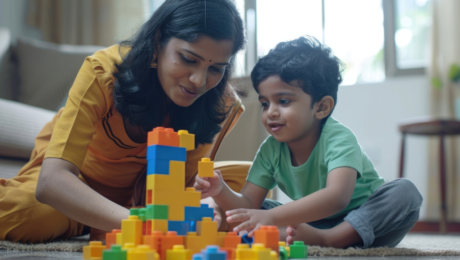
Working parents always have a concern whether their children are in the right hands or not. However, with the emergence of daycare centers, parents feel a bit relieved while they are at work. Daycare centers are dedicated childcare centers that provide a safe and supportive environment to children. Children are given a homely environment with dedicated time for meals, naps, games, and study. These daycare centers have a holistic approach to a child’s development. However, parents are often clueless about daycare charges.
In this blog post, we have explored different types of daycare centers and have uncovered the truth behind daycare charges. We hope that this article will help new parents who are planning to put their children into daycare centers.
Types of Day Care Services in India
The following are the daycare services available in India:
- Daycare Centre or Creches: These are professionally managed facilities with a dedicated staff to care for children. Children of all age groups can go to a creche. They provide comprehensive care to children, including meals, naps, playtime, and early childhood education.
- Home-Based Daycare: Home-based daycares are operated from the caregiver’s home. They provide a more intimate and homely environment to children.
- Nannies: Nannies are professional caregivers hired to take care of children in the family’s home. They give customized care to children as per their needs. They can be hired for children of all age groups.
- Anganwadis: They are government-run childcare and education centres. They provide nutrition, education, and healthcare to children across all age groups.
- Corporate daycare refers to daycare services that businesses offer to their employees. They provide working parents with ease and comfort.
- Playgroups: Playgroups are unofficial get-togethers for play and interaction between kids and their caregivers. They give kids a supportive, engaging, and enjoyable atmosphere.
Also Read: Transform Your Classroom: Engaging Classroom Decoration Ideas for Primary School
The best type of daycare for you will depend on your child’s age, your family’s needs, and your budget. Consider factors such as location, hours of operation, staff qualifications, and the overall environment when choosing a daycare.
Factors Influencing Day Care Charges in India
The daycare center fees can vary greatly in India based on a number of factors. Here are some of them:
- Location: One of the most important factors in deciding daycare costs is location. Due to their high operational costs and demand, daycare centers located in metropolitan areas typically have higher prices. The daycare’s surroundings and locality have some bearing on the fees as well.
- Daycare Type: Center-based daycares may charge extra due to their greater overhead expenses. Hiring nannies might come with even higher costs, particularly if they possess specific training or previous child care expertise. Anganwadis, on the other hand, are inexpensive government-run organizations.
- Facilities and Infrastructures: Daycares with modern facilities, like air conditioning, play areas, and security systems, may charge higher rates. If the daycare provides meals or snacks, this can add to the cost. Daycares offering additional activities like music, dance, or art classes may have higher fees.
- Staff Qualification: Higher fees may be demanded by employees with greater experience and qualifications, which would raise daycare expenses. Daycares that put money into worker development and training could charge more.
- Number of Children: Because staffing expenses are higher in daycares with lower child-to-staff ratios, prices may be higher. Because of economies of scale, larger groups might have slightly cheaper per-child costs.
- Services Provided: Daycares that are open later in the day may charge extra. The fee may increase if the childcare provider offers transportation services. Childcare centers that serve children with exceptional needs may charge extra to meet their needs.
We hope this will help if you are someone planning to put your child into a daycare. However, make sure to compare the daycare charges in your area and choose the best one that suits your child’s requirements.
FAQs:
How to know the daycare fees near me?
You can call the daycare center near your residence and ask them about the daycare fee structure. You can also view the fee structure of the daycare centre through their official website.
What are the daycare charges per hour in India?
Some daycares in India also charge on an hourly basis. The charge for daycare starts from INR 100 and can go up to INR 1000 per hour, depending on the facilities provided.
Why are daycare centers important?
A daycare center provides a safe and supportive environment for children. They have a holistic development approach, which prepares children for going to their first formal educational institution, which is the playschool.
- Published in Top Play School
Making Unforgettable Memories: Fun Blue Day Activity for Preschool
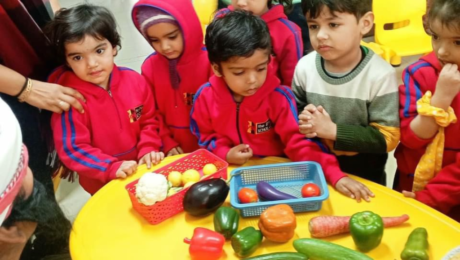
Blue Day is all about celebrating this color in every possible way. Imagine a blue-themed classroom where every child is dressed in blue clothes, and the classroom is decorated likewise. Doesn’t it appear to be a fun-filled, vibrant day already? In Little Scholar, the Blue Day celebration is another form of educational activity where we give children exposure to identifying various colors and their significance.
In this article, we will explore the world of blue day activity for preschool and how they are celebrated at Little Scholar.
Blue Day Activity for Preschool and its Significance
Blue Day is a fun-filled celebration at pre-schools where children are introduced to the color. Teachers arrange various theme-based activities to keep the children engaged. In Little Scholar, we encourage children to come dressed in blue outfits and participate in fun activities at school.
Here’s why the Blue Day celebration at preschool is important:
- Color Recognition: Our blue day celebration at our playschool helps children improve their color recognition skills. They learn to focus on the color blue and identify different shades of blue.
- Sensory Exploration: In Little Scholar, children engage with various textures, materials, and objects, which enhances their sensory development.
- Enhance Creativity: Art and craft activities done during the Little Scholar Blue Day celebration help children improve their creativity and imagination power.
- Social Interaction: Blue day activities for playschool hosted during our Blue Day celebration help children improve their social skills while they learn to interact with their peers.
- Theme-Based Education: The Blue Day celebration at Little Scholar is an excellent example of theme-based education, where children learn various concepts centered around a specific theme—in this case, the color blue.
How is Blue Day Celebrated in Little Scholar?
At Little Scholar, we plan various activities for the celebration of Blue Day. Here’s a list of all the blue color day activities for preschool:
- Dress up in Blue: At Little Scholar, we encourage children to come dressed in their favorite blue outfits to complement the theme of the Blue Day celebration.
- Blue-Themed Classroom Decoration: We also decorate the classroom with blue decorations, including blue balloons, streamers, and posters.
- Art and Craft Activities: We allow children to do various blue-themed art and craft activities, such as painting a blue flower or a blue fish. We also involve them in craft projects like making a blue collage. We also host 3D Blue Day activities for preschool, during which we encourage them to work on 3D art and crafts.
- Learning Activities: At Little Scholar, we design several learning activities. For example, we keep various objects on a table and ask children to pick only the blue objects from there. This helps children better identify colors and their shades.
- Outdoor Activities: Outdoor activities such as pool parties are organized for children in summer. Discover more engaging activities for preschoolers to enjoy at home in our article on 10 Engaging Preschool Activities to Keep Your Little Ones Busy.
- Blue-themed Snacks and Refreshments: Blue-themed snacks and refreshments such as blueberries and blueberry smoothies are provided to children at Little Scholar to go with the theme.
This list of blue day activity for preschool is mostly followed in Little Scholar as it keeps children engaged in fun activities while enhancing their skills.
FAQ:
What to do for the Blue Day celebration at preschool?
On the Blue Day celebration, wear a blue outfit and decorate the classroom with blue decors such as blue balloons and streamers. Line up a few theme-based activities for children throughout the day.
Why is Blue Day celebrated in pre-schools?
Blue Day is an educational activity and is celebrated in pre-schools to develop a better sense of identifying colors in children.
When is Blue Day celebrated in pre-schools?
You can celebrate Blue Day on any day during the summer months, as long as the weather is bright and sunny.
- Published in Uncategorized
Transform Your Classroom: Engaging Classroom Decoration Ideas for Primary School
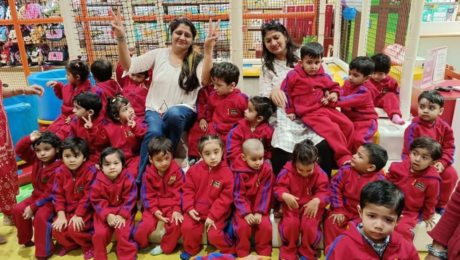
Imagine our childhood days when we used to enter a well-decorated, colorful classroom. The decoration is used to make us happy and fill our hearts with joy instantly. These decorations used to often have an educational purpose in primary schools apart from being aesthetic.
If you are a primary school teacher and are confused about classroom decor, this blog is for you. In it, we will explore different classroom decor and come up with unique classroom decoration ideas for primary school. Read this blog until the end to discover amazing ideas.
Themed Classroom Decoration Ideas for Primary School
If you are facing a struggle with theme-based classroom decoration ideas, worry not! We are here to share some amazing classroom decoration themes that we also follow at Little Scholar:
- Set Sail for Learning (Ocean-Themed Decor): For this theme, you may use vibrant-colored fish cutouts, origami fish, or colorful coral reef wall hangings to decorate the room. In addition, incorporate an interactive ocean creature hunt activity that will help them identify several aquatic animals. You can also create some handmade charts for classroom decoration that will be both engaging and informative.
- Blast Off to Literacy (Space-Themed Decor): For this theme, you can transform the ceiling into a starry night sky using some glow-in-the-dark stars. Decorate the bulletin board with pictures of planets and astronauts. Create a big rocket with cardboard and include a rocket reading activity where they can learn different space-related stories. It’s one of the best classroom board decoration ideas for primary school.
- Let’s go on a Science Safari (Jungle-Themed Decor): Create a jungle-based theme in the classroom. One of the best classroom wall decorations for primary school is to create some leafy vines on it. You can also introduce fun activities, such as making a mystery box filled with some rainforest objects for students to explore and identify.
- Fairytale Fun for Building Foundation (Fairytale-Themed Decor): For this theme, you can create a bulletin board with a fairytale theme. You can make a fairytale-themed story reading corner using fairy lights. Additionally, you can also create a ‘happily ever after’ board where students can write what they aim to become.
Benefits of Classroom Decoration for Primary School
By now, you must be wondering what the point of so much decoration is. How do these decorations contribute to a child’s brain development? Well, we have answers to your question. Here are the benefits of classroom decoration for primary school:
- Boosting Children’s Engagement: Imagine a primary school classroom with empty walls and bulletin boards. Wouldn’t that sound boring? However, a well-decorated classroom will evoke curiosity in a child, and he/she will begin exploring different things. Hence, decorating classrooms in primary school will help children engage with things going on around them. To understand the critical role of early education, check out our article on Shaping Future’s Stars: The Importance of Pre-Primary Schools.
- Supporting the Curriculum: These decorations usually have a high educational value. Hence, they support your curriculum and help children grasp knowledge easily. For example, if you are covering a curriculum on aquatic life, décor based on an aquatic theme will support your curriculum and help students learn easily.
- Creating a Positive Environment: You can create a happy and welcoming vibe in your classroom by decorating it with colorful items. You can also display your children’s artwork and use it for classroom decorating. This would make them feel happy and rewarded.
- Sparking Creativity: It is obvious that a classroom filled with creative decorations evokes creativity in children. At times, you can also ask children for some decoration ideas, which will allow them to think outside the box, express themselves, and inspire them.
- Sensory Stimulation: Always make sure to include various textures, colors, and, if possible, sounds in your decorations. It will help the young minds to gain sensory experiences and cater to different learning experiences.
Overall, we can say that at Little Scholar, we prioritize classroom decorations for primary schools. We hope that the suggested classroom decoration ideas will be helpful for both children and teachers and enhance the learning experience at primary schools.
FAQ:
- How do you decorate primary classrooms?
Here are some of the ways by which you can beautify your primary classrooms:
- Decorating bulletin boards based on specific themes.
- Display student artwork.
- Classroom rules.
- Wall hangings.
- Origami crafts.
- Gaming zone.
- How can I beautify my classroom?
Here’s how you can beautify your classroom:
- Create theme-based decoration.
- Make colorful decorations that look bright and vibrant.
- Avoid cluttered decorations.
- Add engaging infographics to grab children’s attention.
- How can I decorate my school board?
Here are the steps to follow for decorating your school board:
- Choose a neutral-colored backdrop for your school board.
- Choose a theme to go for when decorating the school board.
- Include vibrant colors for decoration.
- Keep things easy-going and simple.
- Add engaging elements to your school board, such as infographics.
- Published in Top Play School
Day Care Centre Near Me with Fees: A Parent’s Guide to Budget-Friendly Childcare
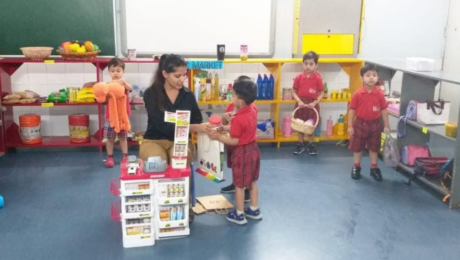
We often get queries online saying, “Best daycare center near me with fees.” We understand where they come from. With so many daycare options around us, it gets difficult to choose the best one for our children.
Finding the best daycare center for your child involves a lot of research and exploration. Not only do we want the best facilities for our children, but we also want them to fit our budget. In this article, we have explored different types of daycare options and shed light on the diverse programs they offer, along with an estimated fee. So, read this article till the end to find out different daycare options that could fit into your budget.
Types of Daycare Centre
Are you wondering why choosing a daycare center involves so much research? The answer is simple. A daycare center is the first learning institution for your child. Here are some of the types of daycare centers:
- Home-Based Daycare: often referred to as family daycare, home-based daycare centers are operated out of the provider’s home. They offer a more intimate and homely environment, typically with smaller groups of children. This setting can provide a closer caregiver-to-child ratio, fostering strong bonds and personalized attention.
- Center-Based Daycare: These daycares are operated out of dedicated buildings or sections of schools. They follow a structured curriculum and offer a wide range of activities to support children’s developmental needs. One of the best centre-based daycare is Little Scholar Noida. It offers resources, such as playgrounds, educational materials, and specialized staff for various age groups.
- Playschool: These are educational daycare centers that focus on early childhood education for children. They provide a structured environment with a curriculum designed to prepare children for kindergarten. Little Scholar is one of the best playschools in Noida. It emphasizes on cognitive, social, and emotional development of children through play-based learning.
- Montessori Schools: Montessori daycare centers follow the Montessori method of education, which emphasizes independence, hands-on learning, and collaborative play. The environment in Montessori school is carefully prepared to facilitate self-directed learning and exploration.
- Employer-Sponsored Daycare: Some companies offer on-site daycare centres as a benefit to their employees. These centers provide convenient childcare options close to the parent’s workplace, making it easier to balance work and family responsibilities.
- Cooperative Daycare: parents take an active role in the operation and management of the daycare in cooperative daycare centers. This can involve volunteering time, participating in decision-making, and contributing to various activities. Cooperative daycare centers foster a strong sense of community and involvement among families.
Daycare Programs and Activities
Daycare centers design programs and activities that target children’s holistic development. They combine education with extracurricular activities to create a fun yet nurturing environment for children. For a comprehensive overview of daycare centers, including their various types and benefits, check out our article on What is a Daycare Center – Types and Benefits.
These programs often include a structured curriculum with age-appropriate activities, such as:
- Arts and crafts
- Storytelling
- Music
- Outdoor play
Additionally, children learn to interact socially by interacting with peers and teachers, which helps develop communication and collaborative skills. Daycare centers ensure that children enjoy themselves by combining educational activities with fun activities. This ensures the development of social, cognitive, and motor skills in children.
Daycare fees and expenses
Daycare fees and expenses can vary widely based on factors such as location, type of daycare, and the age of the child. If you search ‘daycare center near me with fees’ on your browser, you will come across various options. Typically, center-based daycares tend to be more expensive than home-based options due to higher operating costs and more extensive facilities. For more detailed fee breakup, you can visit the official daycare website or physically visit the daycare center for detailed information.
- Published in Best Play School