
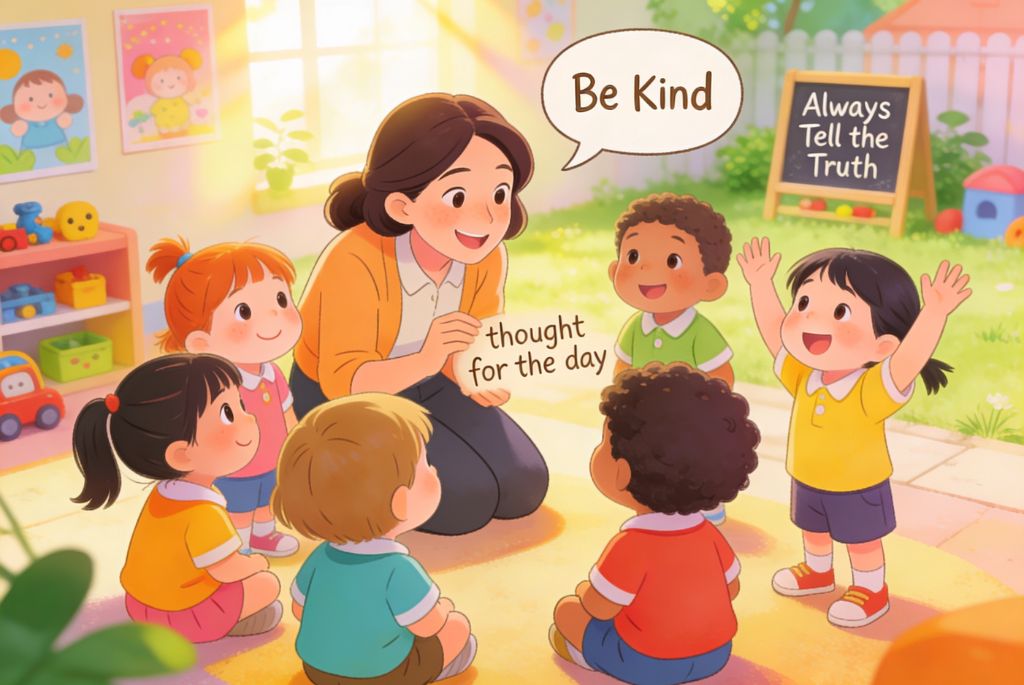
Every school morning starts with assembly, and one short line often shapes how students carry themselves through the day. At Little Scholar Noida, where children learn in a supportive environment, such daily practices are part of building strong values from an early age. A good and meaningful school assembly thought for the day for kids helps children pause, think, and start with a positive mindset.
Teachers often notice that even a simple thought can influence how students behave in class. For example, when a thought about kindness is shared, children are more likely to help their classmates or speak politely during the day. These small changes, repeated daily, slowly build strong habits.
Why Thought Of The Day Is Important For Students
A daily thought gives direction to a child’s thinking. When students hear a school assembly thought for the day for kids, they are reminded of values like respect, honesty, and discipline.
Teachers often observe that students respond better to short and clear messages. Long speeches may be forgotten, but a simple line stays in their mind. It also helps children reset their mood. A fresh thought in the morning can turn a dull or distracted start into a more focused one.
Over time, these thoughts support emotional growth and improve how students interact with others.
Top 5 School Assembly Thoughts For Kids
A good school assembly thought for the day for kids should be easy to understand and meaningful. Here are five thoughts that work well in real school settings:
1. “Believe in yourself, and you will achieve great things.”
This builds confidence and encourages students to try without fear.
2. “Every day is a new chance to be kind and helpful.”
Many teachers notice better peer interaction when kindness is discussed in assembly.
3. “Small steps lead to big achievements.”
This helps students stay patient with studies and daily practice.
4. “Honesty is the best policy.”
A simple value that helps build trust between students and teachers.
5. “Learn something new every day.”
Encourages curiosity and keeps children interested in learning.
For younger classes, a short thought for the day during school assembly for kids, like “Do your best today,” works very well because it is easy to remember and repeat.
How To Choose The Right Thought
Not every thought connects with children. Schools should choose ideas that align with students’ age group and daily experiences.
A useful school assembly thought for the day for kids should be:
- Simple and clear
- Short enough to remember
- Connected to real-life situations
- Positive and practical
For primary students, shorter lines work better. Older students can understand slightly deeper ideas, especially when linked with real examples.
How Schools Can Use Thoughts Effectively
In many schools, the impact of the thought depends on how it is presented. Instead of just reading it, teachers can make it more meaningful.
Some practical ways include:
- Asking one student to explain the thought in their own words
- Sharing a quick real-life example related to it
- Connecting the thought with classroom behavior
- Repeating the thought during the day in class
When students are involved, the school assembly thought for the day for kids becomes more than a routine. It turns into a daily learning moment.
A Simple Weekly Approach Schools Can Follow
Schools can also plan thoughts around weekly themes:
- Monday: Motivation
- Tuesday: Discipline
- Wednesday: Kindness
- Thursday: Learning
- Friday: Respect
This makes it easier for students to connect ideas across the week. It also helps teachers reinforce the same value in classrooms.
Role Of Teachers In Making It Meaningful
Teachers shape how students connect with the thoughts shared during assembly. A simple line can easily be forgotten, but when a teacher adds a short explanation or a real-life example, it starts to make sense in a child’s daily life. Even a quick 2-3 line discussion in class can help students see how that thought applies to situations they face.
For instance, if the thought is about honesty, a teacher might describe a small situation like admitting a mistake instead of hiding it. When children hear such examples, they begin to relate the message to their own actions. Over time, these small conversations help them understand values in a practical way rather than just memorising words.
Teachers can also encourage participation by asking students what they understood from the thought or if they have experienced something similar. This makes the activity more interactive and gives children a chance to express their ideas. When students share their views, the message becomes more personal and easier to remember.
Another helpful approach is linking the thought with classroom activities. A value like kindness can be connected to group work, helping classmates, or simple acts like sharing. When children see the same idea being followed during the day, it strengthens the impact of the morning thought.
Schools like Little Scholar Noida focus on these small daily practices as part of overall development. The aim is not just to deliver a message but to make sure children understand and apply it in their behaviour.
When done consistently, this practice builds a habit of reflection in students. They start paying attention to their actions, thinking about what is right, and making better choices on their own. Over time, these daily thoughts contribute to shaping responsible and aware individuals, one small step at a time.